Deir el-Medina: visiting Luxor's tomb builders' village

Last checked: October 2026

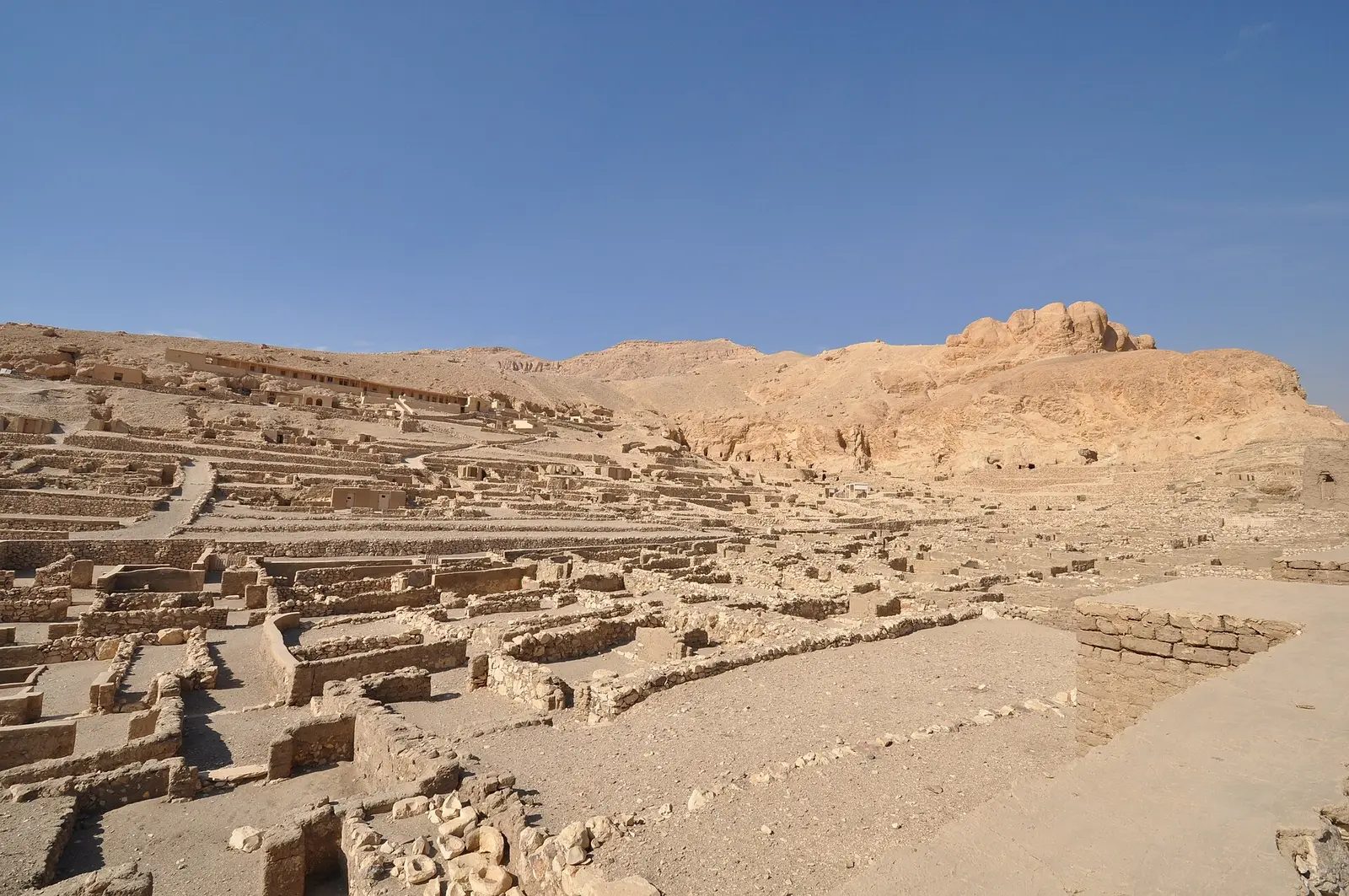
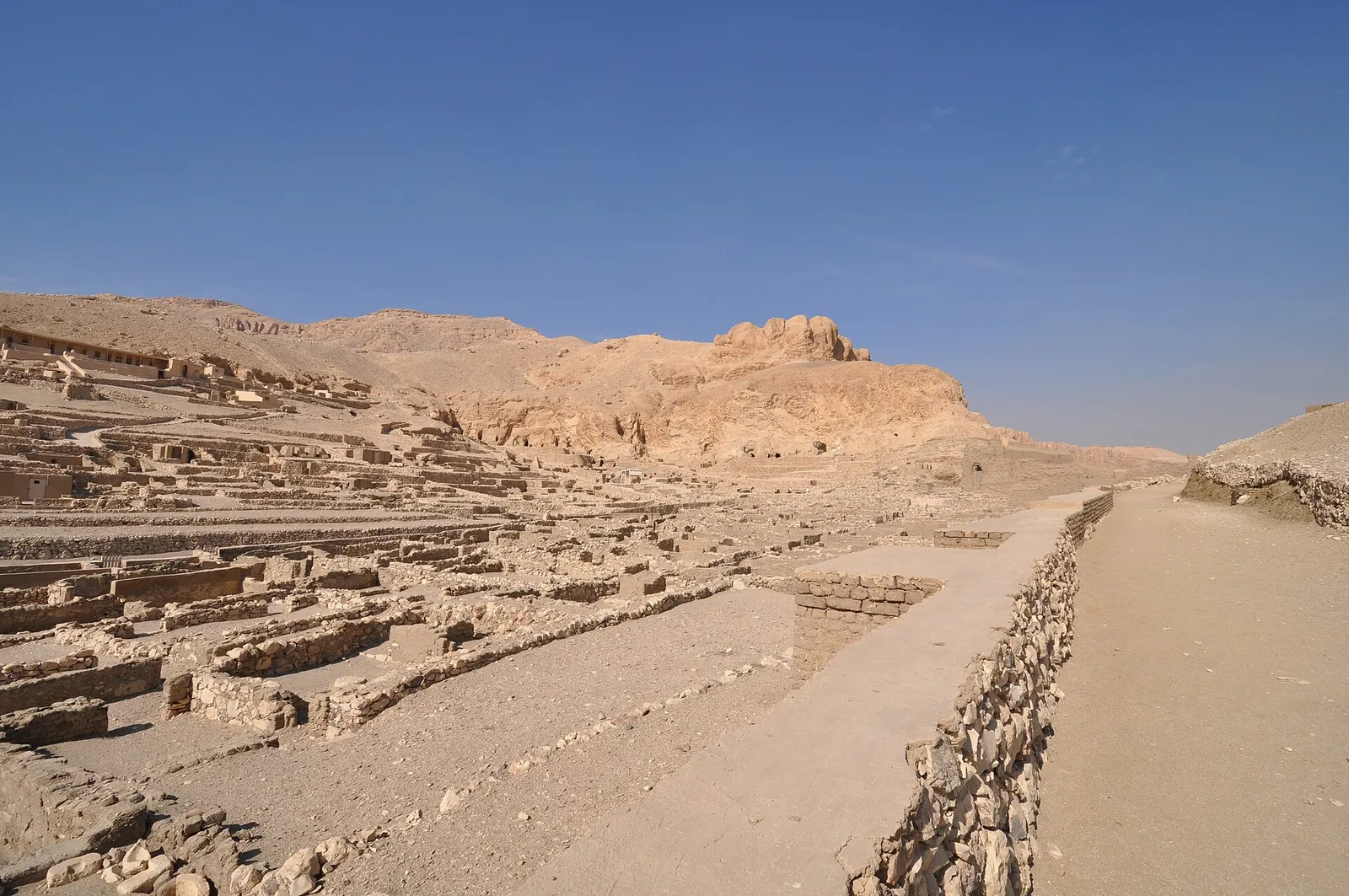
The excavated village of Deir el-Medina below the Theban hills under a clear sky
Deir el-Medina on Google Maps

Deir el-Medina

Photo: Google Maps
Type
Historical place
Address
PJH2+37, Al Qarna, Luxor Governorate 1340412
Area
Qurna (West Bank)
Google rating
4.7 (982 reviews) on Google Maps, checked October 2026
Opening hours on Google Maps, checked October 2026
DayHours
Monday
06:00–17:00
Tuesday
06:00–17:00
Wednesday
06:00–17:00
Thursday
06:00–17:00
Friday
06:00–17:00
Saturday
06:00–17:00
Sunday
06:00–17:00

Who lived here

The village of the tomb builders

Lived in about 1550–1080 BC1

People lived in the tomb builders’ village during the 18th to 20th Dynasties of the New Kingdom, about 1550–1080 BC1. They were the royal tombs’ workforce of literate priest-craftsmen, known as the Servants in the Place of Truth3.

The village had a mixed population of Egyptians, Nubians and Asiatics1. The Theban Necropolis around it lies on the west bank of the Nile, opposite Thebes (Luxor)4.

Ostraca and everyday life

The village stands out for what its people left behind in writing. Thousands of ostraca3 and other domestic remains make it the best-studied ancient Egyptian community.

Wikipedia calls the finds one of the most thoroughly documented accounts of community life in the ancient world1.
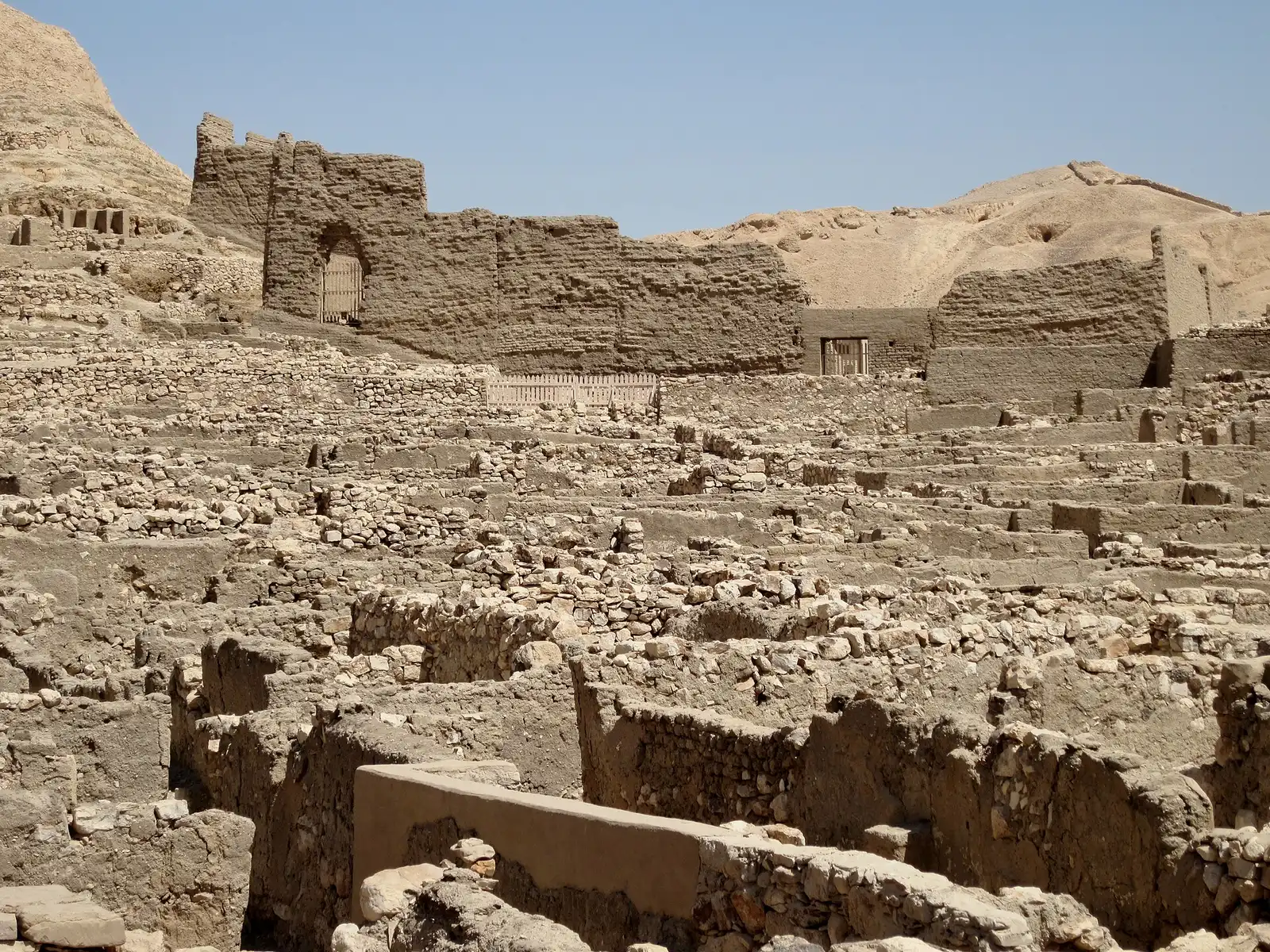
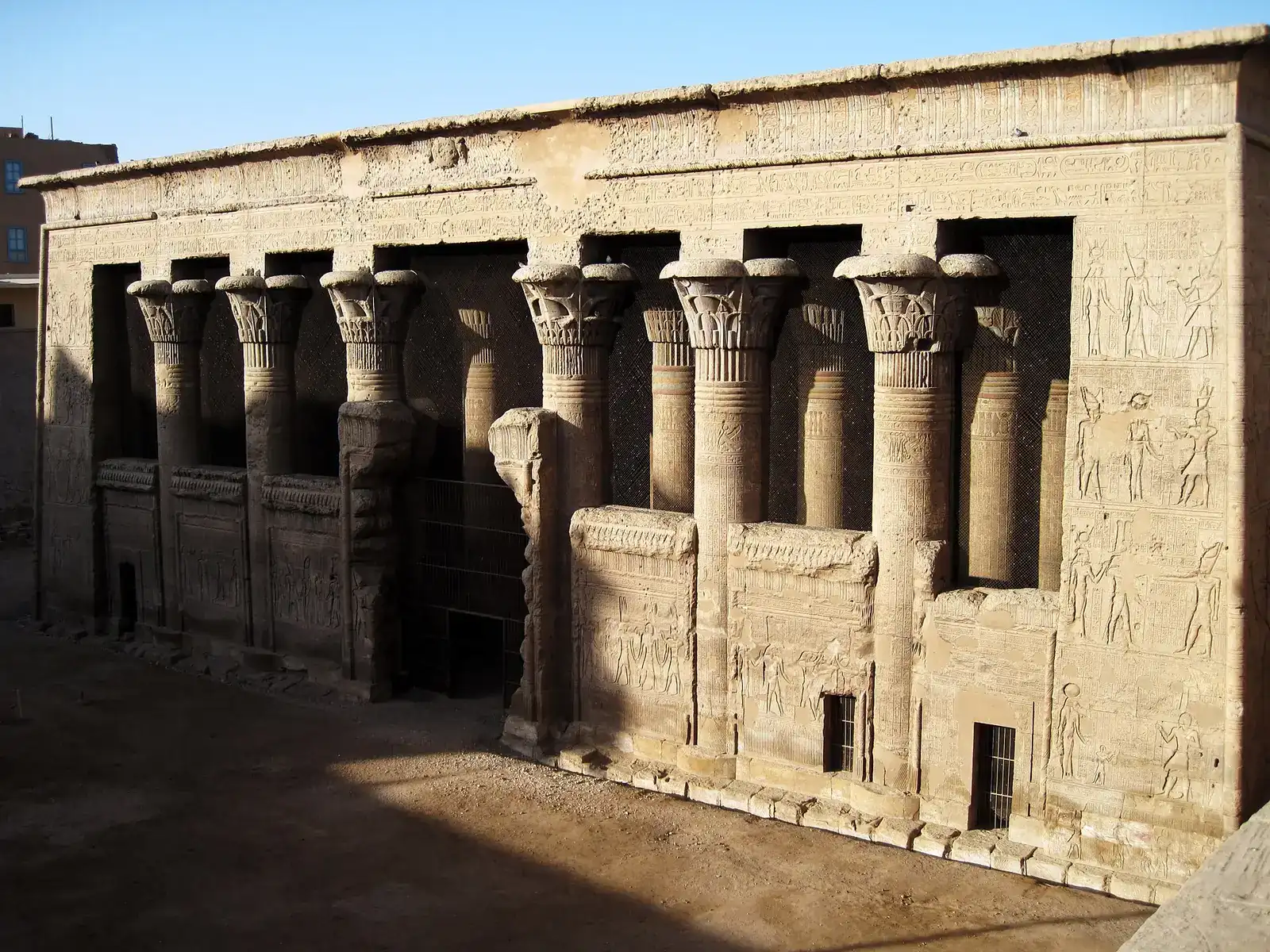
Mud-brick enclosure of the Ptolemaic temple above house ruins at Deir el-Medina

What you’ll see at the site

  • The workmen’s own tombs: Wikipedia counts them among the most beautiful on the West Bank1.
  • Tomb of Sennedjem: the burial place of the workman Sennedjem and his family, found undisturbed in 18863.
  • Tomb of Pashedu: needs an extra ticket (see the fees below).
  • Hathor temple: built by the Ptolemies where an ancient shrine to Hathor had stood1.
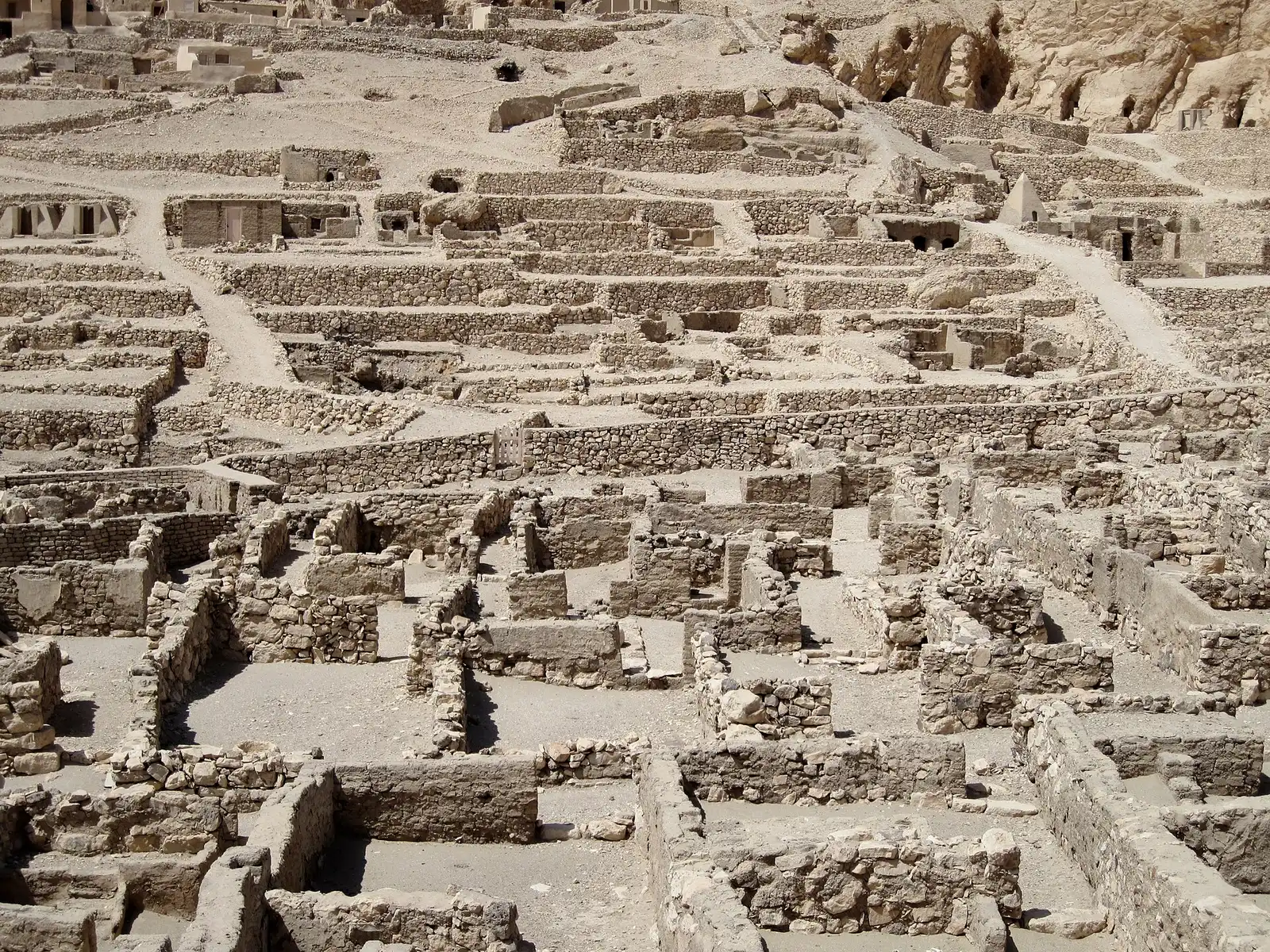
Rows of excavated house walls at Deir el-Medina, with tomb chapels on the slope behind

Before you go

Tickets, prices and opening hours

You buy your ticket at the central West Bank ticket office3, which sells tickets for every West Bank site except the Valley of the Kings, the Valley of the Queens and Hatshepsut’s temple.

Card payment only3

Deir el-Medina entry tickets

TicketAdult
Village, tombs and Hathor temple
EGP 220
Students, same ticket
EGP 110
Tomb of Pashedu (extra)
EGP 120
Tomb of Pashedu, students
EGP 60

Far and Beyond Travel (tour company); Wikivoyage

These prices come from tour companies and Wikivoyage, which agree with each other. Egypt Tours Plus gives a lower EGP 1002 (about US$2), so be ready to pay the higher figure.

Google Maps lists Deir el-Medina as open Mon–Sun 06:00–17:006 (checked October 2026). Far and Beyond Travel, a Luxor tour company, lists the same 6am to 5pm7.

West Bank route

How do you get there from Luxor?

Cross the Nile to the West Bank, buy your ticket at the central booth, then cover the last stretch by taxi or on foot.

Booth to site: just under 1 km2

  1. Cross to the West Bank

    Egypt's official tourism site says the West Bank burial grounds are reached by ferry.

  2. Buy your ticket

    The ticket booth is about 5 km from the West Bank ferry landing, about 500 m west of the Colossi of Memnon.

  3. Go on to the village

    From the ticket booth to the site is just under 1 km.

Without a car

The West Bank’s archaeological sites are spread out3, so plan how you’ll move between them:

  • Taxi for the day: about EGP 500–1,0003 (about US$9–18) from the West Bank, depending on how well you haggle.
  • On foot: Wikivoyage suggests a budget walking route of about 6 km3 past Medinet Habu, the village and the Tombs of the Nobles.
  • From the airport: the North Luxor axis carries tourist traffic from Luxor International Airport, east of the Nile, to the West Bank sites8.

Summer highs average above 40 °C9 in June, July and August, so save the walk for November to early March10.

Make a day of it

Nearby sites on the West Bank

From Deir el-Medina you can walk on to several other sites, so it fits easily into a West Bank day:

Ramesseum: just under 900 m12

  • Valley of the Kings: within easy walking distance to the north1. The Ministry lists Tutankhamun’s tomb at EGP 70011 (about US$13) for adults. Plan that visit with the Valley of the Kings page.
  • Tombs of the Nobles: you can walk straight in from the village3. See the Tombs of the Nobles.
  • Ramesseum: just under 900 m12 from the Hathor temple. More on the Ramesseum’s ruins.
  • Medinet Habu: the walking route starts at Medinet Habu3, so it pairs well with Medinet Habu.
  • Valley of the Queens: it has its own ticket office3. Nefertari’s tomb there, found in 190413 by Ernesto Schiaparelli’s Italian mission, was closed as of January 20263. The Valley of the Queens map and tomb guide has the rest.
  • Hatshepsut’s temple: a mortuary temple for the female pharaoh and her father, Thutmose I14.

Hot air balloons take off from the West Bank, near Hatshepsut’s temple15, and flights run at sunrise or at sunset10. Read what to expect on a Luxor balloon ride before you book, or browse the full list of things to do in Luxor for the East Bank temples.

Guided tours that stop here

If you’d rather have transport and an Egyptologist guide sorted, this private West Bank day tour includes the village alongside the two valleys and Hatshepsut’s temple.

The main street of Deir el-Medina running between rows of house foundations Day tour

8 hoursPickup includedFree cancellation

Reflections Travel

Luxor Day Tour: Valley of Kings & Queens & Hatchepsut Temples

4.9 (1,741 reviews) on Viator, checked October 2026

fromUS$89.24

See dates on Viator

Names, photos and access

Questions people ask

What does the name Deir el-Medina mean?

The Egyptian Arabic name means 'Monastery of the City'. The village's ancient name, Set maat, meant 'Place of Truth'.

Is the village part of a UNESCO World Heritage Site?

Ancient Thebes with its Necropolis went on the UNESCO list in 1979. Its West Bank necropolis covers about 10 km² of tombs, temples and villages.

Can you take photos inside the tombs?

No. Photography is not allowed inside the tombs.

Is the site wheelchair accessible?

Civitatis says its tour of the area is wheelchair accessible if you ask when booking, but other tour companies call the site hard going for wheelchair users. Check with your operator.

Photos: Wikimedia Commons and Pexels. Authors and licences: image credits
Checked against 18 sources · last checked October 2026
  1. Wikipedia · checked October 2026
  2. Wikivoyage · checked October 2026
  3. Wikivoyage · checked October 2026
  4. Wikipedia · checked October 2026
  5. Central Bank of Egypt (official, via Frankfurter) · checked October 2026
  6. Google Maps listings via DataForSEO · checked October 2026
  7. Far and Beyond Travel (tour company) · checked October 2026
  8. presidency.eg (official) · checked October 2026
  9. Wikipedia · checked October 2026
  10. Wikivoyage · checked October 2026
  11. egymonuments.gov.eg (official) · checked October 2026
  12. Wikivoyage · checked October 2026
  13. egymonuments.gov.eg (official) · checked October 2026
  14. egymonuments.gov.eg (official) · checked October 2026
  15. Hod-Hod Soliman (operator) · checked October 2026
  16. Experience Egypt (official) · checked October 2026
  17. whc.unesco.org (official) · checked October 2026
  18. Civitatis (booking agent) · checked October 2026
Page history · last changed 23 October 2026
  • First written