Valley of the Kings diorama: Luxor souvenirs and markets
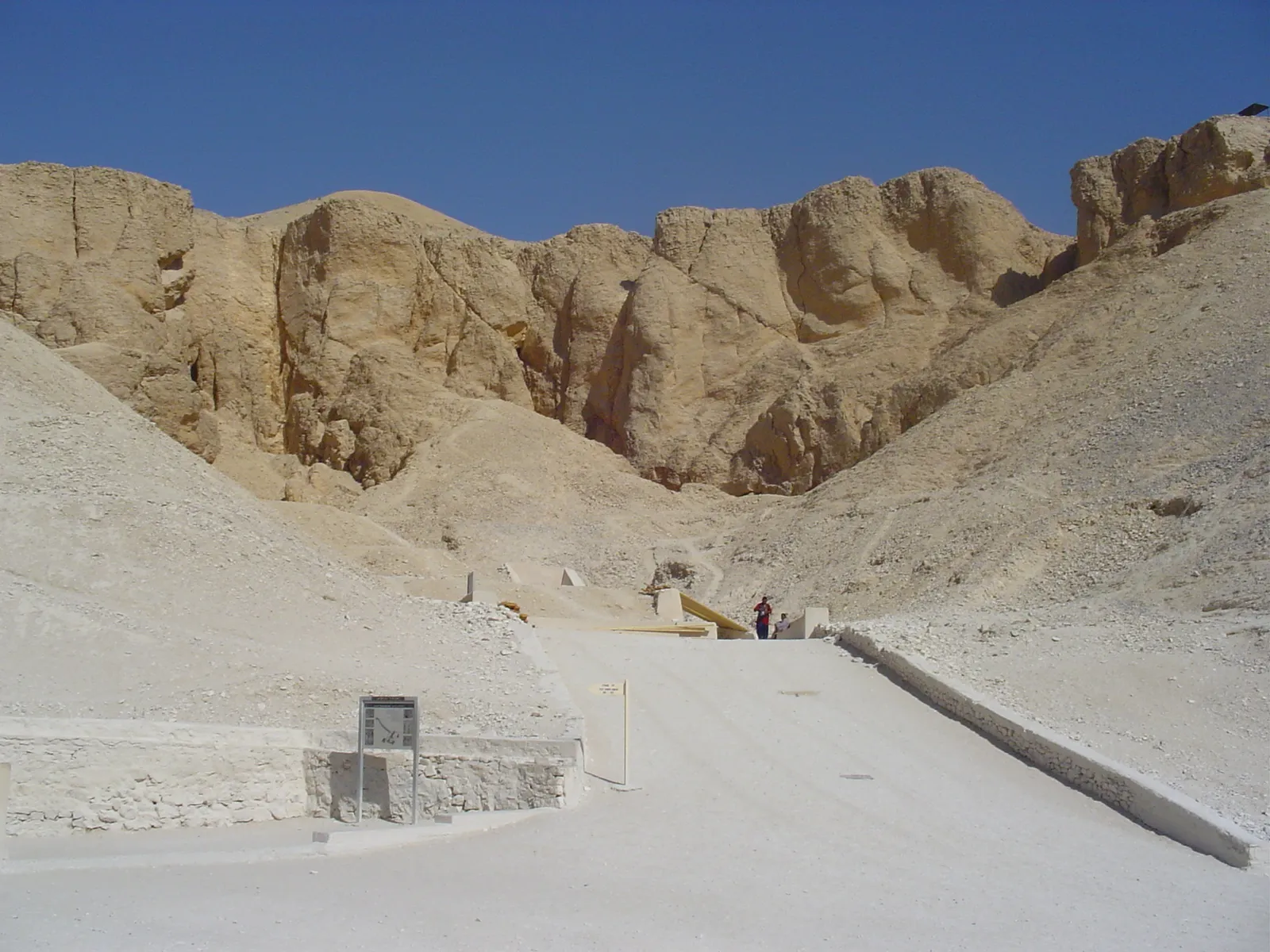
On the West Bank
The Valley of the Kings model: look, don’t buy
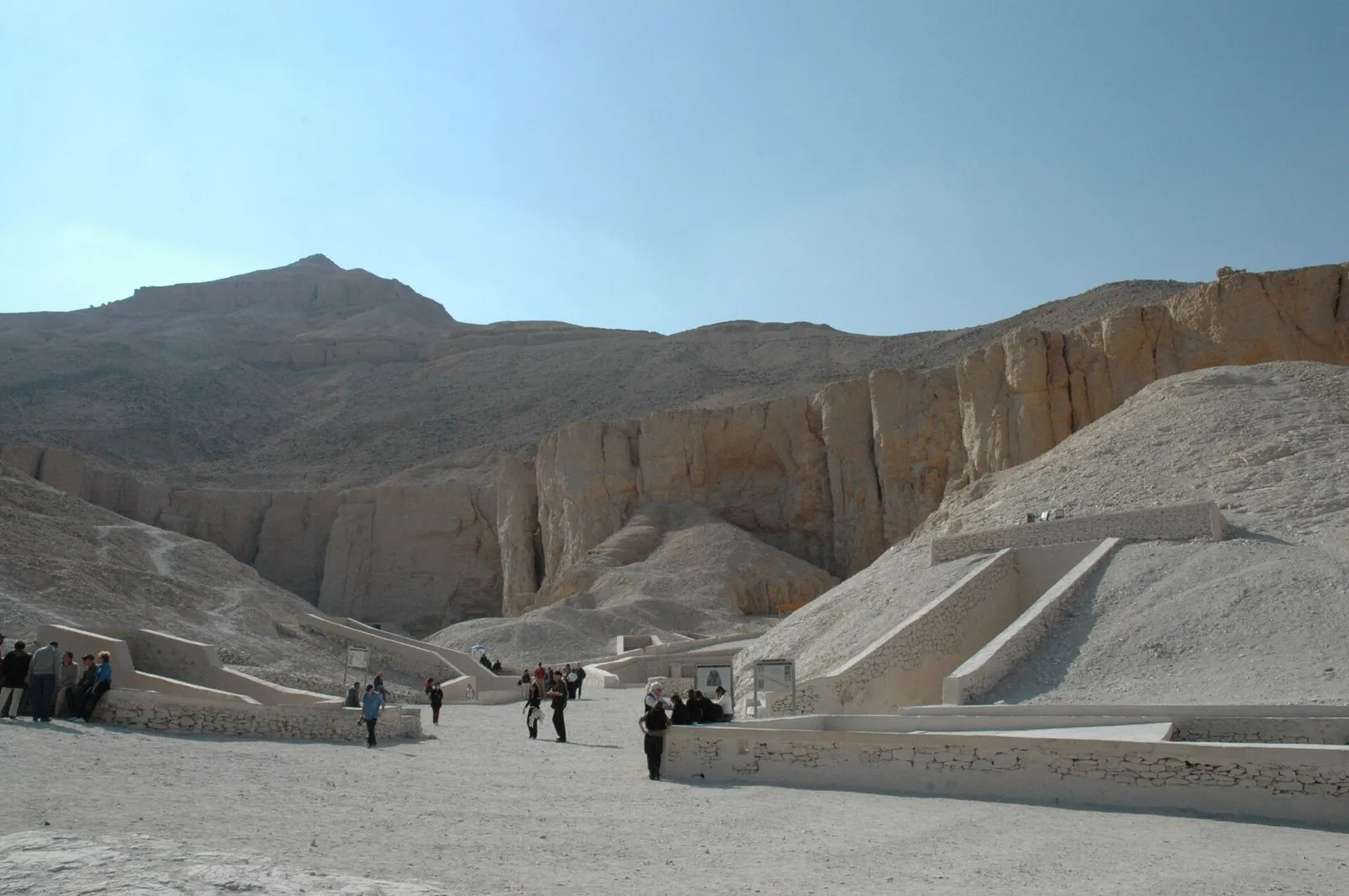
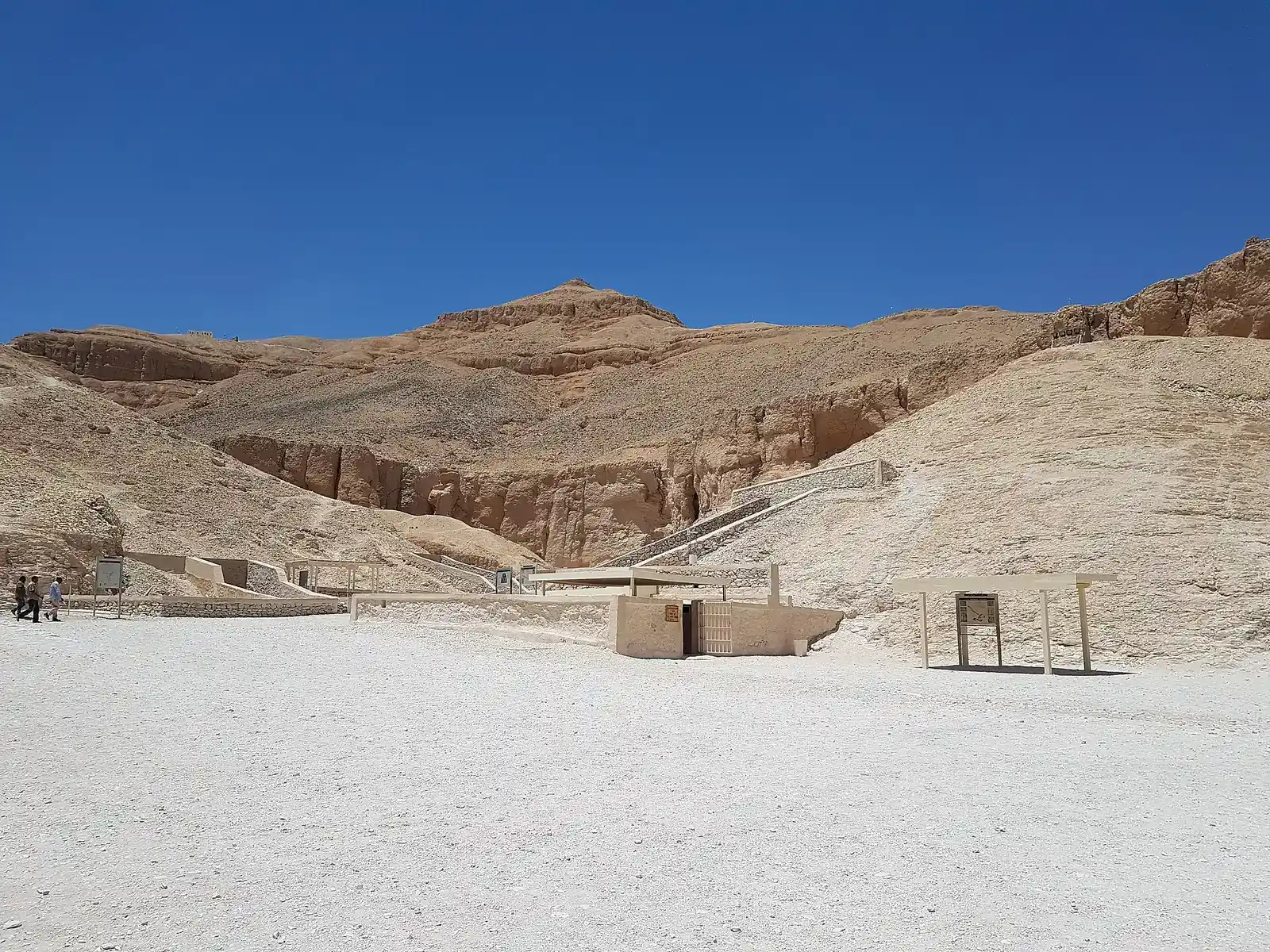
The Valley of the Kings has its own model, but it’s there for orientation, not for sale. Rough Guides says you can see a model of the site1 in the visitors’ centre.
Tickets by bank card only5
Frommer’s describes a transparent topographical map of the valley3 in the orientation centre at the bus car park. That page is older, so treat it as a pointer rather than a promise.
UNESCO dates the valley’s tombs, including Tutankhamun’s, to 1500–1000 BCE4. To plan which tombs to see, use the Valley of the Kings map and visiting notes.
Markets and shops
Where to shop in Luxor for Egyptian souvenirs
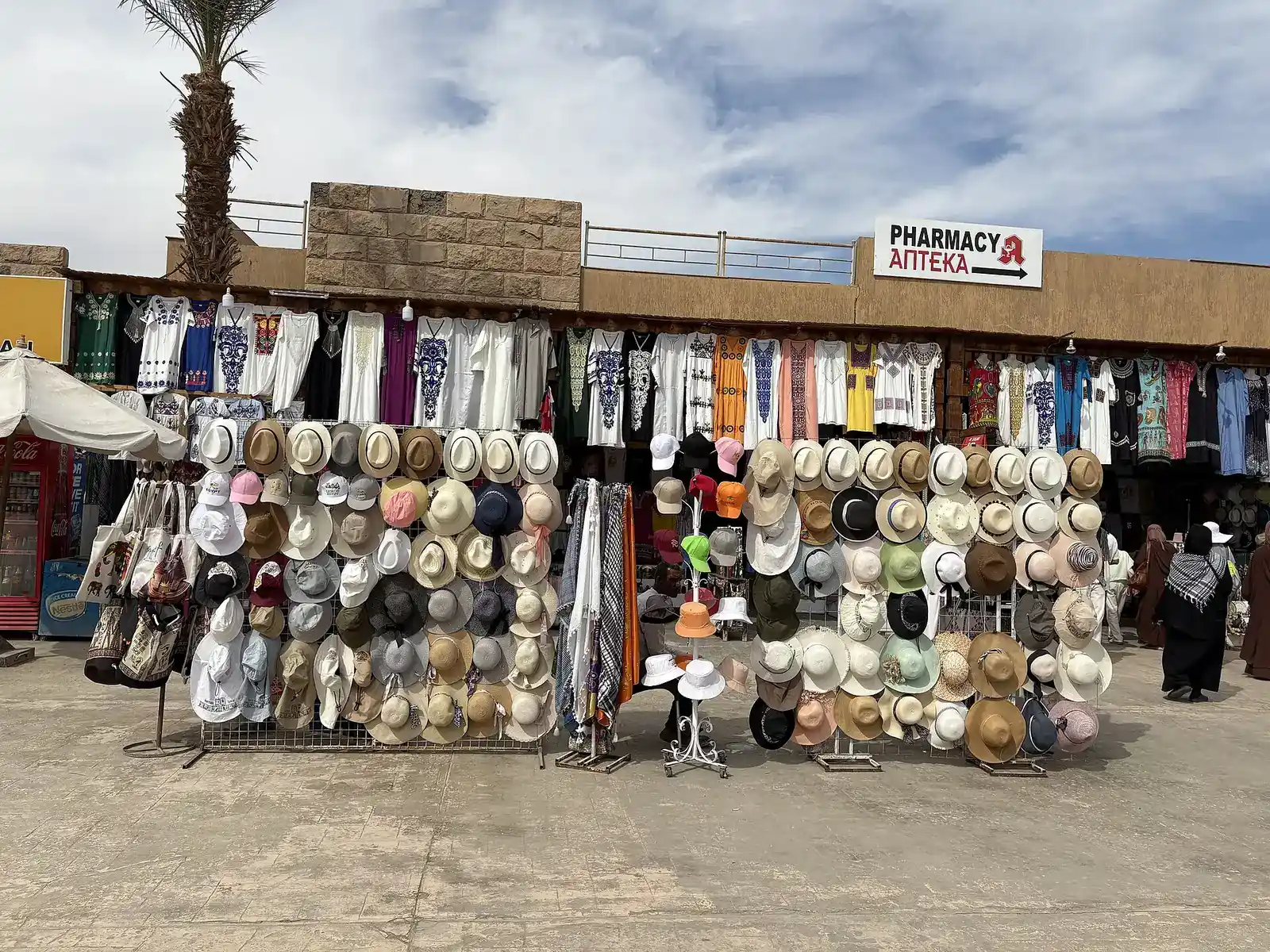
Luxor has at least two different markets, and the older one covers several streets near Luxor Temple6. The River Nile splits Luxor into the East Bank and the West Bank7, and you can shop on both.
At least two markets6
| Place | Where | What you'll find |
|---|---|---|
| Luxor Market | Near Luxor Temple | Copies of artefacts, papyrus scrolls to alabaster sculptures |
| Older market | Several streets near Luxor Temple | Wooden trellis shade; the locals' souq lies past the touristy part |
| Air-conditioned market hall | – | A hall lined with shops on both sides |
| Duty-free shop | Close to the north end of Luxor Temple | – |
| Gift Shop by Karnak | 30 m north of Karnak Temple's parking, on the right | – |
| 'Papyrus Museum' | Luxor | A papyrus shop: some good pieces, some cheap imitations |
| Hapi for Alabaster | El Qurna, West Bank | Alabaster workshop, at its present site since 1992 |
| Valley of the Kings visitors' centre | West Bank | A model of the site to look at, not to buy |
Egyptian Streets (news); Wikivoyage; Outlook Traveller (news); Rough Guides (travel guide)
What the stalls sell, going by the sources:
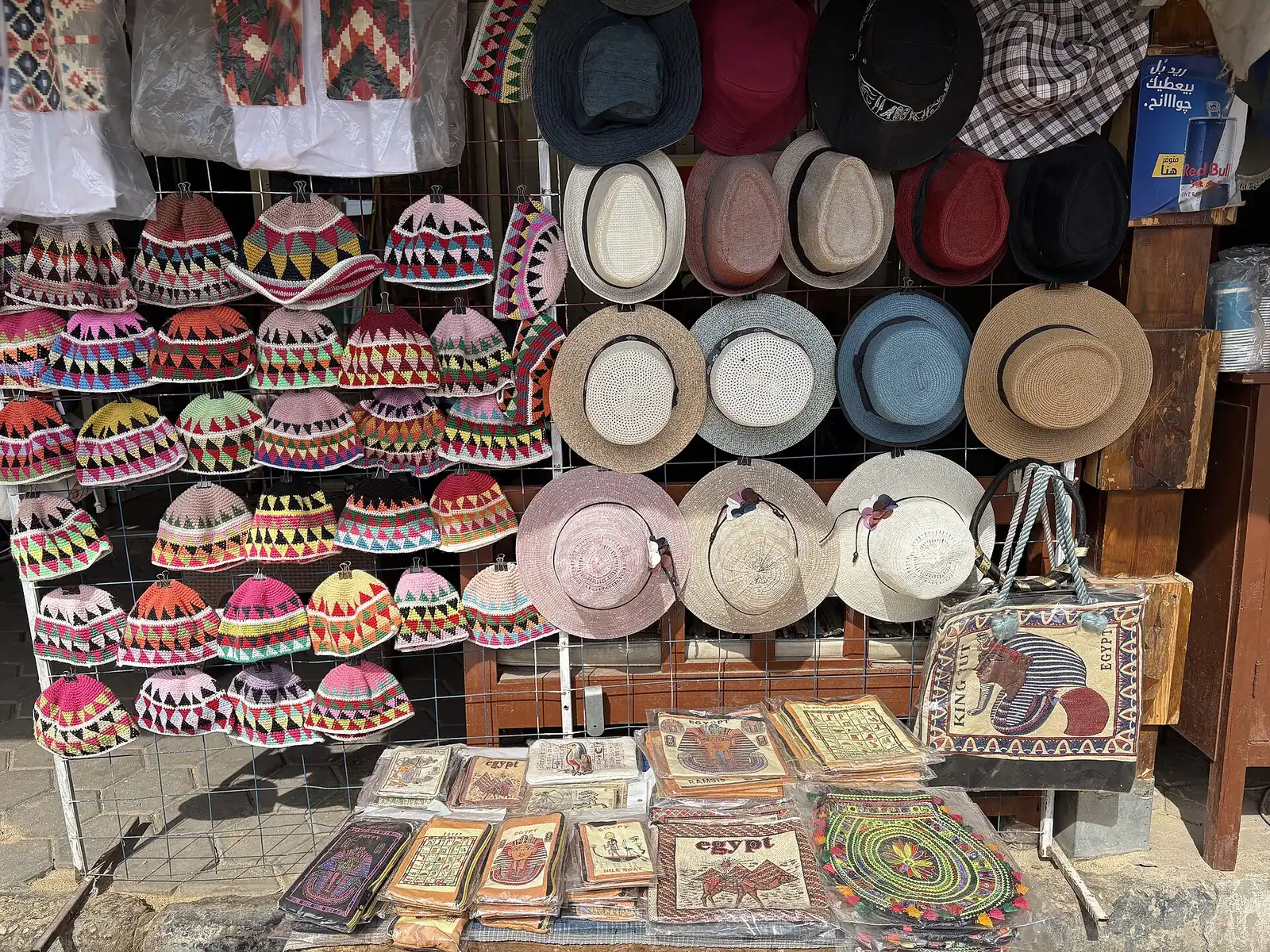
- At the Luxor Market: rugs, jewellery, spices, shoes, bags, souvenirs and carvings2.
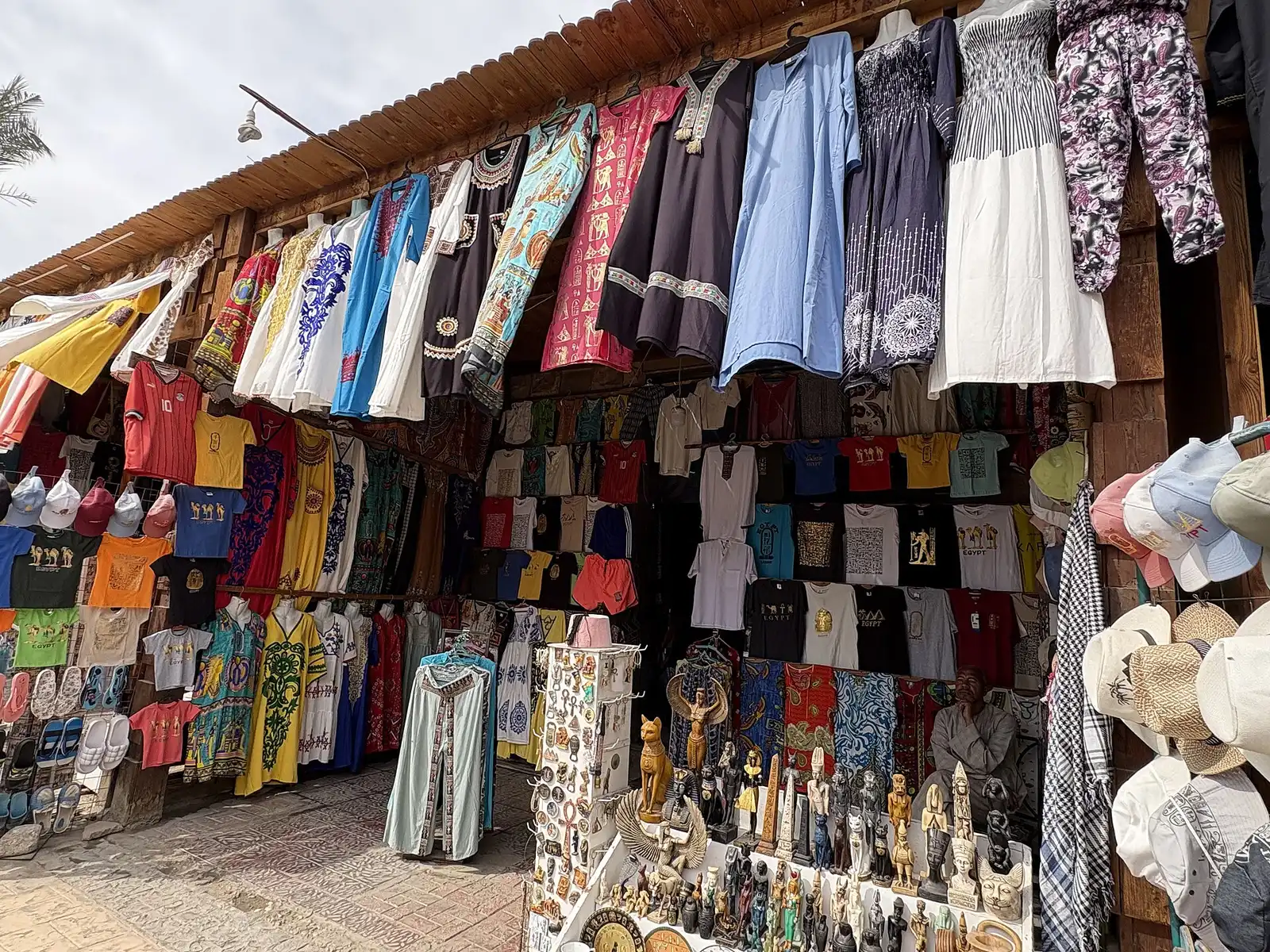
- In the markets: cotton galabeyas, though buying even one can take hours of bargaining6.
- At the souq: foul sodani (roasted peanuts)8, an Upper Egyptian snack Egypt’s official tourism site suggests you try.
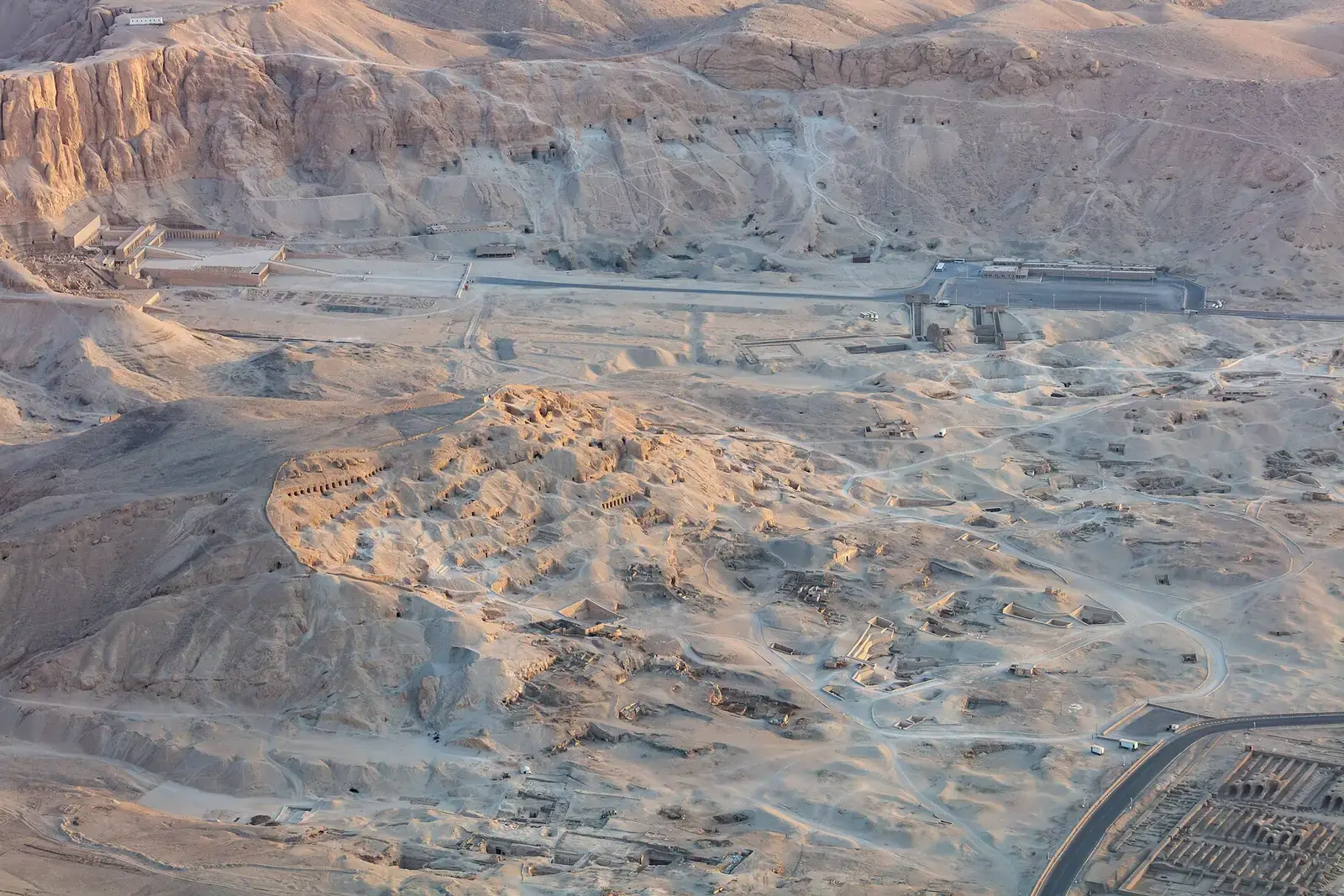
- On the West Bank: souvenirs, alabaster and perfume9.
Crafts
Alabaster and papyrus: buying the real thing
Alabaster and papyrus both come in good and imitation versions, so look closely before you pay.
- Wikivoyage warns that much of the alabaster sold is imported and hardly made on site6.
- In El Qurna on the West Bank, Hapi for Alabaster has been at its present site since 199210.
- The Elhofni family in El Qurna has made alabaster crafts since 191010.
- Luxor’s ‘Papyrus Museum’ is a papyrus shop, selling some good pieces and some cheap imitations6.
Money at the souq
How do you pay and bargain at Luxor’s markets?
Bring small notes, start low and be ready to walk away: a seller’s first price can be ten or even a hundred times a reasonable price6.
First price up to a hundred times fair6
- Shop around, because many of the market shops sell the same items6.
- Carry change: Egypt has a constant shortage of small notes and coins, and even banks are reluctant to break many notes11.
- If you use a card, pay only by contactless or chip-and-pin, as some shops are masters at fraud9.
- Dress modestly: the UK government advises it especially in rural areas, mosques and souqs12.
- Expect pressure, as Wikivoyage calls Luxor’s merchants notoriously aggressive and manipulative6.
No source gives market days or fixed opening hours for the souqs. Egypt Today reported on 27 March 2026 that the Prime Minister exempted Luxor Governorate from the 9:00 p.m. closing hours13 for public shops and tourist establishments.
Howard Carter's House
Is there a replica of Tutankhamun’s tomb in Luxor?
Foreign adults EGP 22014
Yes: the grounds of Howard Carter’s house hold a replica of Tutankhamun’s tomb, made and donated by Factum Arte14. It’s the nearest thing to a walk-in model of a royal tomb the sources describe.
Carter built his mudbrick house in 191014, handy for his digs in the Valley of the Kings. His team, backed by Lord Carnarvon, found the tomb in 192215.
Foreign adults pay EGP 220 (about US$4) (checked October 2026) to enter the house, and foreign students EGP 11014 (about US$2). For the original, read the Valley of the Kings tomb guide for Tutankhamun, and note the Luxor Museum shows selected artefacts from the tomb of King Tut7.
Temples to pair with a shopping trip
The shopping spots in the table sit close to some of the big sights, so you can combine them.
- At Luxor Temple, near the older souq and the duty-free shop: Ramesses II set a pair of 25-metre obelisks in front of the pylon, and only one is still in place17.
- At Karnak, near the Gift Shop: Seti I began the Hypostyle Hall and Ramses II finished it, and its roof rests on 134 columns4.
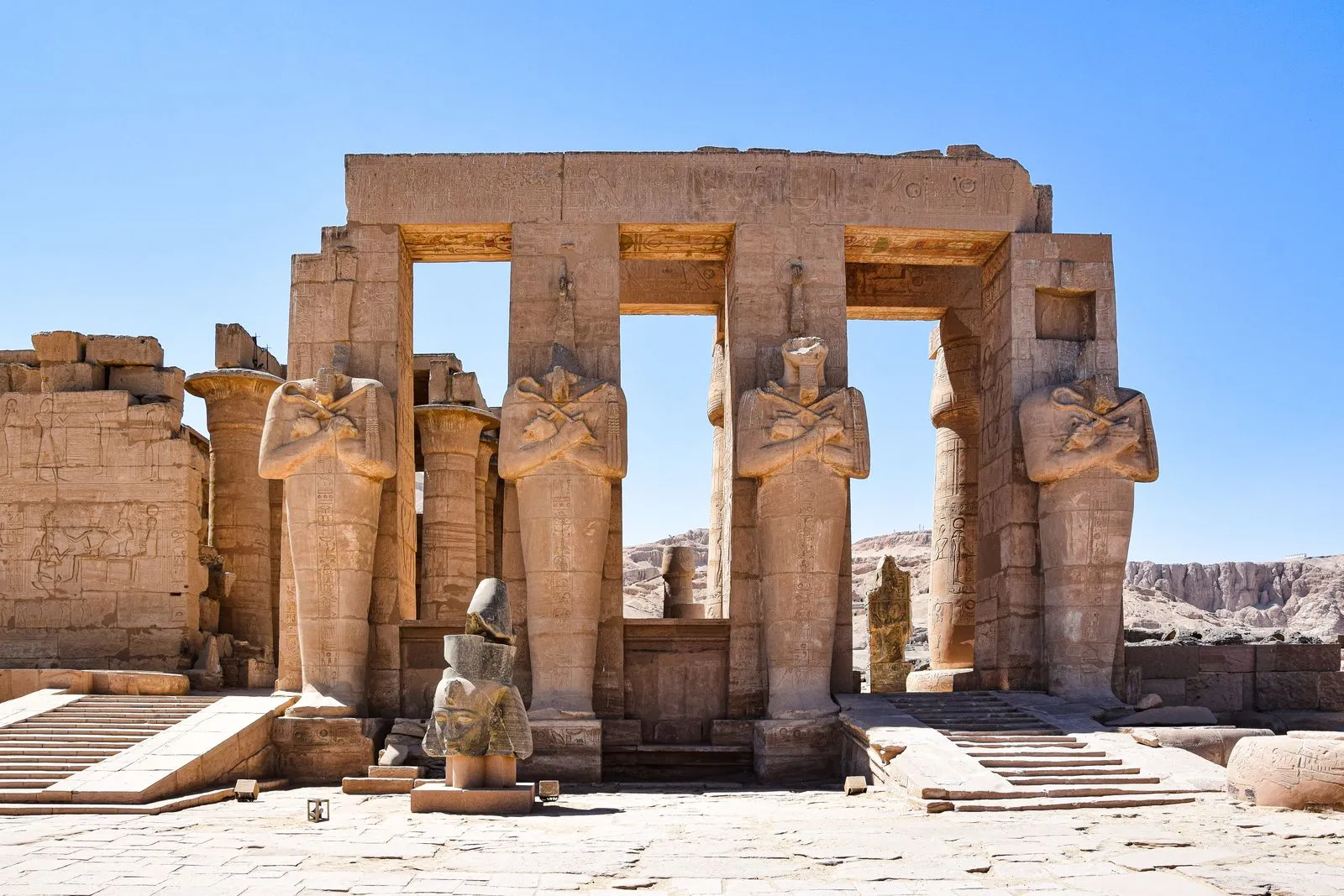
- On the West Bank: Ramses II built the Ramesseum as a funerary temple of sandstone18. See the Ramesseum statues before you go.
- Also on the West Bank: the decorated private tombs covered in the guide to visiting the Tombs of the Nobles.
Questions people ask
Is Luxor the Valley of the Kings?
No. The Valley of the Kings is one of the ruins on Luxor's West Bank, the burial grounds across the Nile, reached by ferry.
What part of Egypt is the Valley of the Kings?
Upper Egypt: it's in Luxor, about 670 km from Cairo.
Can tourists go to the Valley of the Kings?
Yes. It's one of Egypt's most famous archaeological sites and a major Luxor attraction.
Photos: Wikimedia Commons and Pexels. Authors and licences: image credits
Checked against 20 sources · last checked October 2026
- Rough Guides (travel guide) · checked October 2026
- Egyptian Streets (news) · checked October 2026
- Frommer's (travel guide) · checked October 2026
- whc.unesco.org (official) · checked October 2026
- english.ahram.org.eg (news) · checked October 2026
- Wikivoyage · checked October 2026
- Experience Egypt (official) · checked October 2026
- Experience Egypt (official) · checked October 2026
- Wikivoyage · checked October 2026
- Outlook Traveller (news) · checked October 2026
- Wikivoyage · checked October 2026
- GOV.UK (official) · checked October 2026
- Egypt Today (news) · checked October 2026
- Egypt's Ministry of Tourism and Antiquities (egymonuments.gov.eg) (official) · checked October 2026
- Wikipedia · checked October 2026
- Central Bank of Egypt (official, via Frankfurter) · checked October 2026
- egymonuments.gov.eg (official) · checked October 2026
- egymonuments.gov.eg (official) · checked October 2026
- Wikivoyage · checked October 2026
- Wikipedia · checked October 2026
Page history · last changed 23 October 2026
- First written