Ancient Thebes, Egypt: where it is and what survives today
- Modern city
- Luxor
- Built over ancient Thebes
- From Cairo
- About 700 km south
- Direct flight about 1 hour
- Ancient city size
- 93 km²
- Includes parts of the Theban Hills
- World Heritage
- Listed in 1979
- Property covers 7,390 ha
Location
Where is Thebes in Egypt?
Thebes lies along the Nile in Upper Egypt, about 800 km south of the Mediterranean2, and its ruins sit inside today’s Luxor.
About 800 km south of the Mediterranean2
Luxor stands at 89 m above sea level, about 220 km north of Aswan3. From Cairo, a direct flight takes about 1 hour and the train about 10 hours5; the guide to reaching Luxor by air, rail and road has the details.
Names through time
Are Luxor and Thebes the same city?
Yes, in practice: Luxor stands on the ancient city of Thebes3, so a walk through modern Luxor is a walk through Thebes. The city just changed its name a few times along the way.
| Name | Where it comes from |
|---|---|
| Waset | Thebes was capital of Waset, the fourth Upper Egyptian nome2, and took its name from it |
| Diospolis | The Greek name, meaning ‘City of Zeus’2 |
| Thebes of the Hundred Gates | What Greeks called it from Homer’s Iliad on2 |
| Luxor | From the Arabic plural al-quṣūr, ‘the palaces’3 |
Why it mattered
What Thebes is known for
Thebes is known for temples and tombs on a scale few places match: Luxor is often called the world’s greatest open-air museum3. Here’s why the city mattered so much:
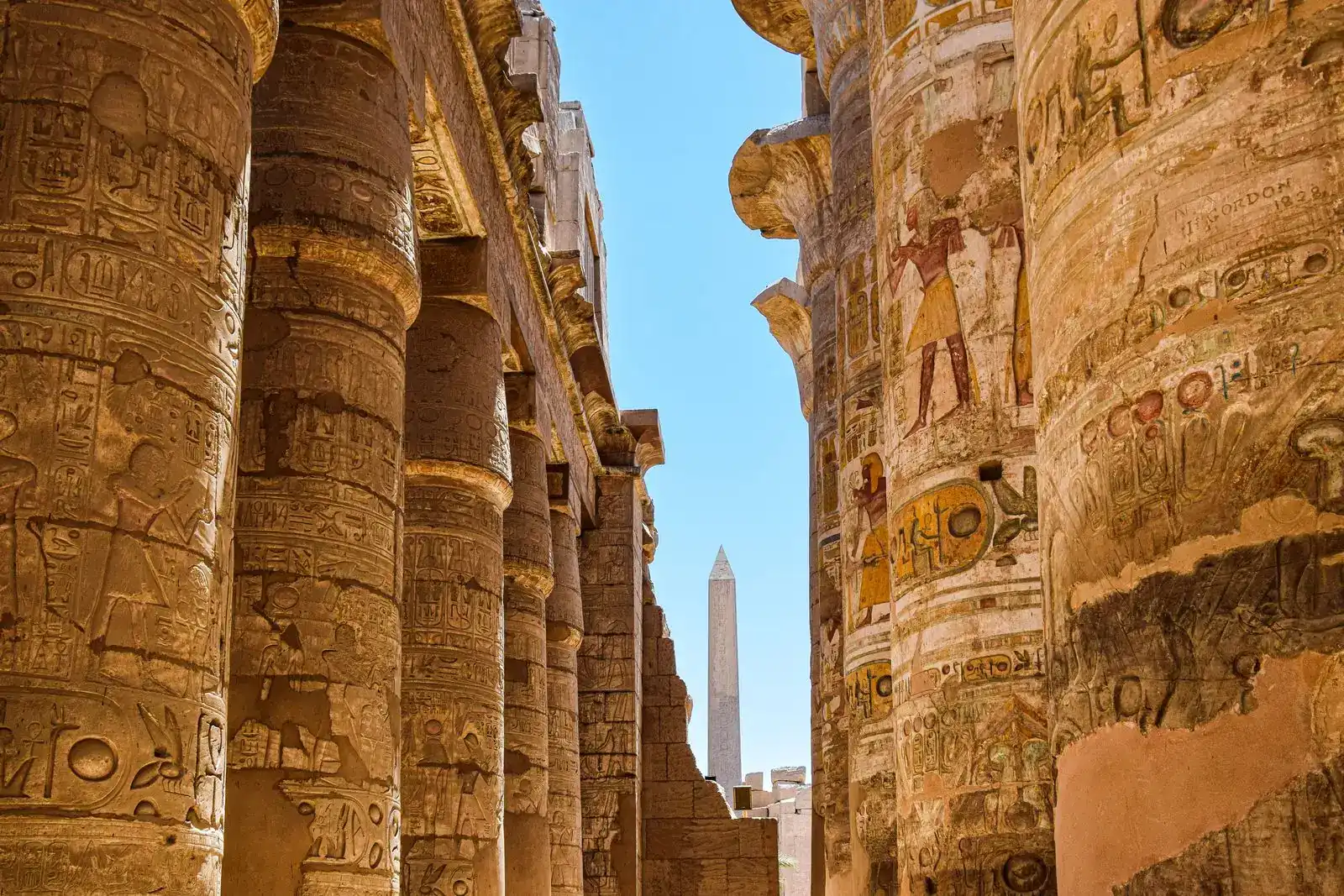
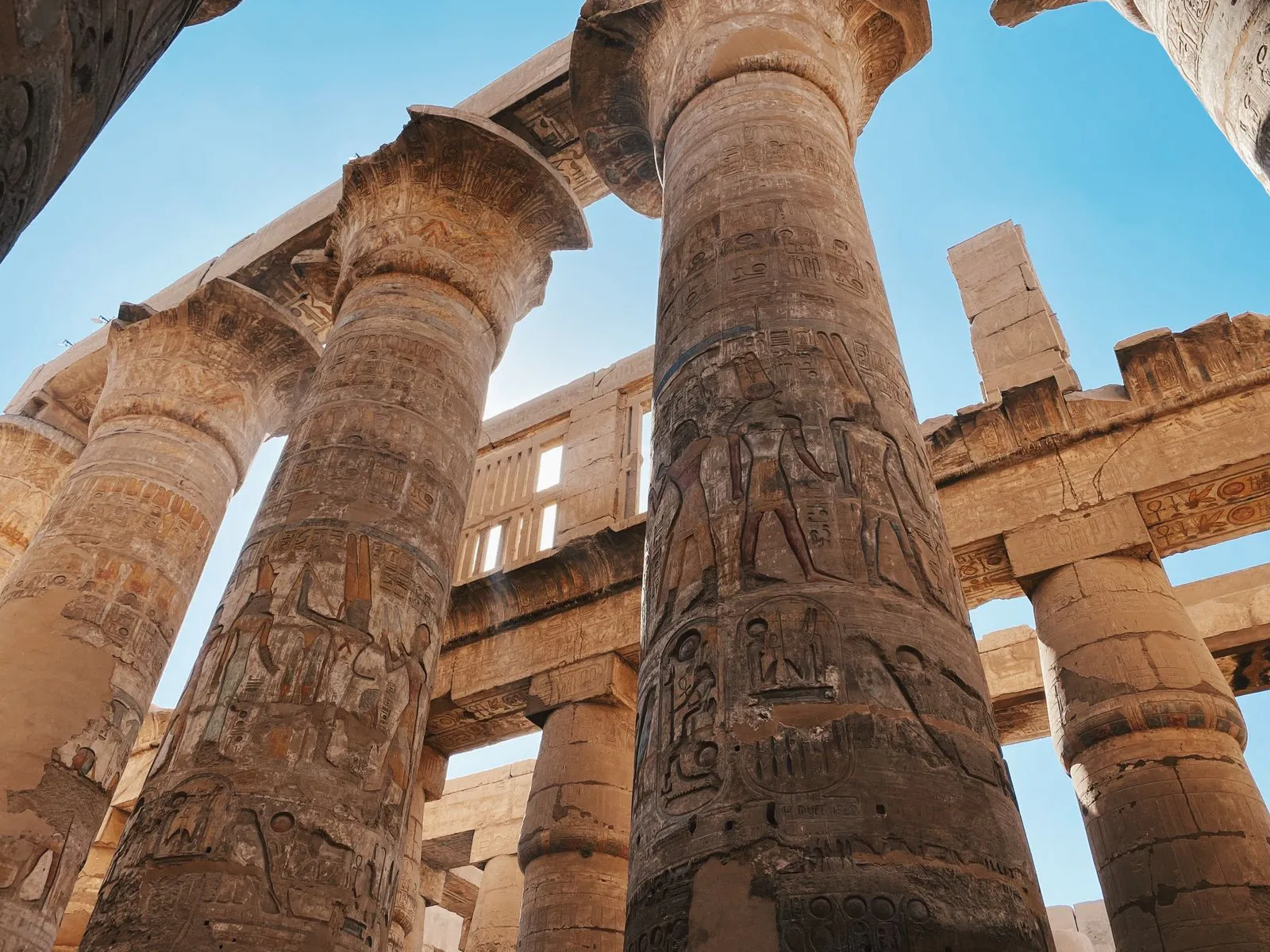
Karnak's Hypostyle Hall: 134 columns1
- Religion: UNESCO calls Thebes the city of the god Amun1, and Wikipedia describes it as the most venerated city during many periods2 of Egyptian history.
- Size: historian Ian Morris estimates that by 1500 BC2 Thebes may have been the largest city in the world.
- People: UNESCO puts the town’s population at about 50,000 in the centuries after 1500 BCE1.
- Karnak: Seti I began the Hypostyle Hall and Ramses II finished it; its roof rests on 134 columns1.
- The royal tombs: the Valley of the Kings is one of the most famous archaeological sites in Egypt5.
Egypt’s official tourism site calls Luxor and Karnak Temples the most revered sites in Luxor6. UNESCO’s World Heritage listing, Ancient Thebes with its Necropolis, has three parts1: the Karnak and Luxor temples on the East Bank and a large archaeological area on the West Bank.
Either side of the Nile
East Bank and West Bank compared
The Nile splits Luxor into the East Bank and the West Bank6, and the split goes back to Thebes itself. UNESCO describes the east as the living city1 and the west as the ‘City of the Dead’.
Necropolis: about 10 km²1
| Bank | In ancient Thebes | What you'll find | Temples and tombs | Getting there |
|---|---|---|---|---|
| East Bank | The living city | Luxor Temple, Karnak, museums, hotels and restaurants | 14 temples | Trains from Cairo arrive here |
| West Bank | The 'City of the Dead' | Valley of the Kings, Valley of the Queens and the major ruins | Thousands of tombs over about 10 km² | By ferry across the Nile |
Wikivoyage; whc.unesco.org (official); Experience Egypt (official)
City of the Dead
What is the Theban Necropolis?
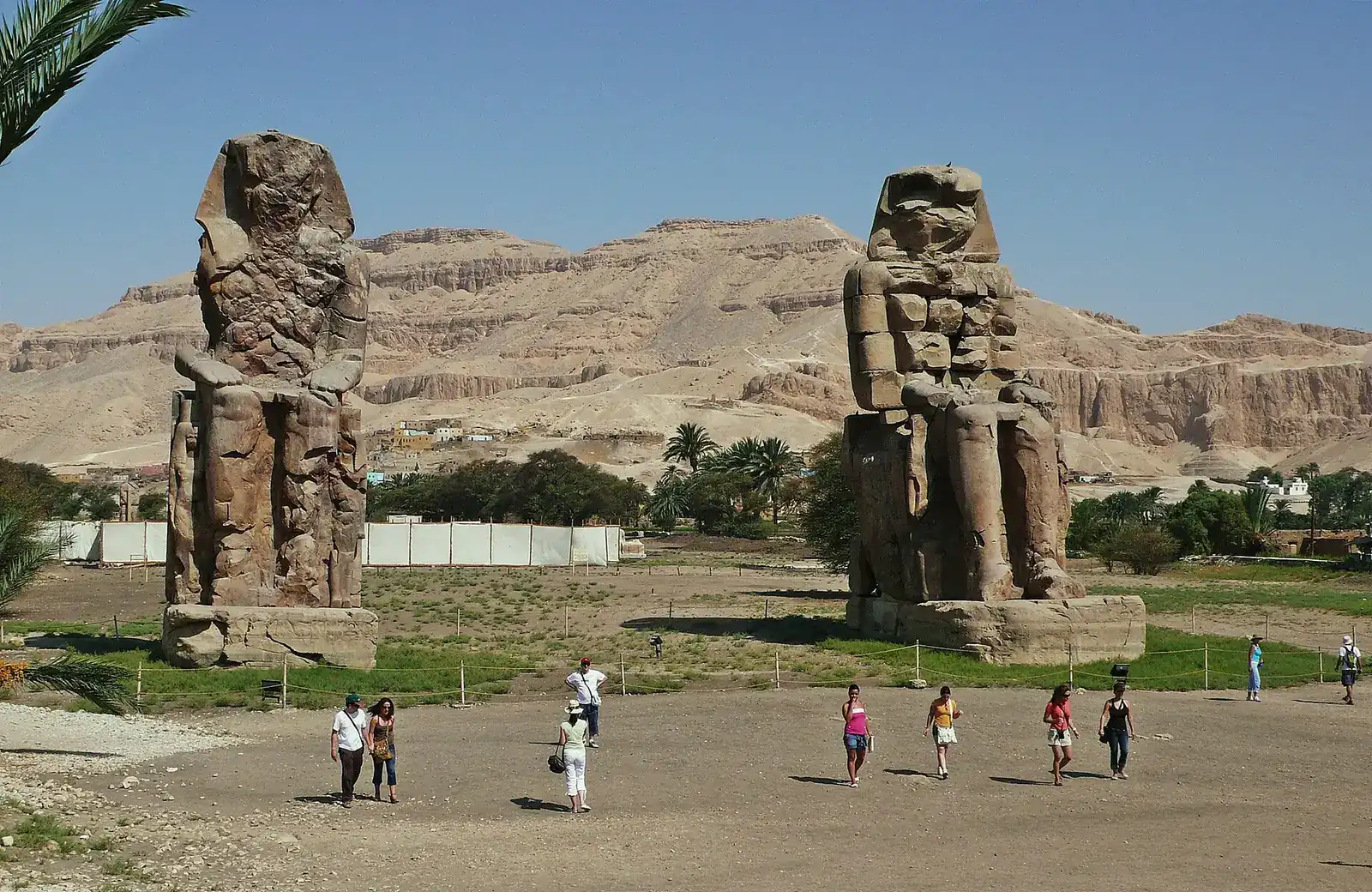
The Theban Necropolis is the burial ground on the West Bank of the Nile, opposite Luxor, used for ritual burials for much of the Pharaonic period, especially the New Kingdom4.
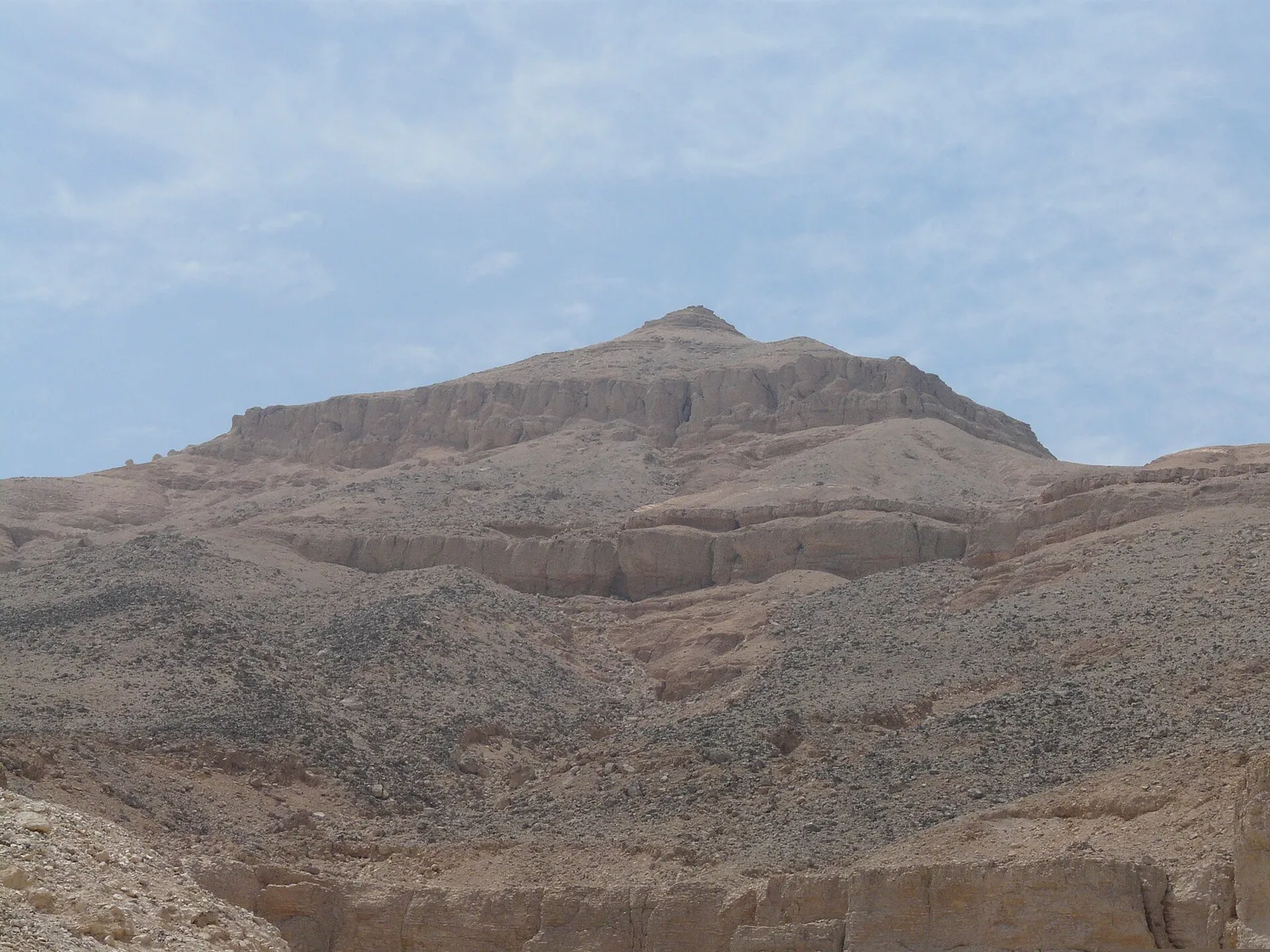
El Qurn: 420–450 m8
A necropolis is a large, designed cemetery of an ancient city7, set apart from where people lived. The Theban one holds several sites you’ll want to know by name:
- Valley of the Kings: royal tombs dated 1500–1000 BCE1, Tutankhamun’s among them.
- Valley of the Queens: where Nefertari, wife of Ramses II1, is buried.
- El Qurn: the peak in the Theban Hills above, at 420–450 m8.
The tombs still spark debate. In 2015 Nicholas Reeves proposed that voids behind the walls of Tutankhamun’s tomb hid Nefertiti’s burial chamber, but later radar scans showed no hidden chambers9.
If you’d rather go with a guide, a guided day tour of the West Bank takes in both valleys.
From settlement to ruin
A short history of Thebes
Thebes went from a Nile settlement to the capital of a united Egypt, then to rubble and, by Strabo’s day, a mere village2.
Inhabited from around 3200 BC2
| When | What happened |
|---|---|
| Around 3200 BC2 | People are living at Thebes |
| About 2050 BC2 | Mentuhotep II defeats the Herakleopolitans and reunites Egypt |
| c. 1650–1550 BCE1 | The Hyksos hold the north; local dynasties 16 and 171 rule from Thebes |
| New Kingdom3 | Ahmose I begins a unified Egypt with Thebes as its capital2 |
| 91 BC2 | A revolt breaks out; in the years after, the city is subdued and turned to rubble |
| 30 BC–641 AD2 | Under Roman rule, the remaining communities cluster round the pylon of Luxor Temple |
| 1st century AD2 | Strabo describes Thebes as reduced to a village |
| 19791 | UNESCO adds Ancient Thebes with its Necropolis to the World Heritage List |
| 7 December 200910 | Luxor becomes its own governorate, separated from Qena |
Living among the tombs
People and communities on the West Bank
Kurna: three villages11
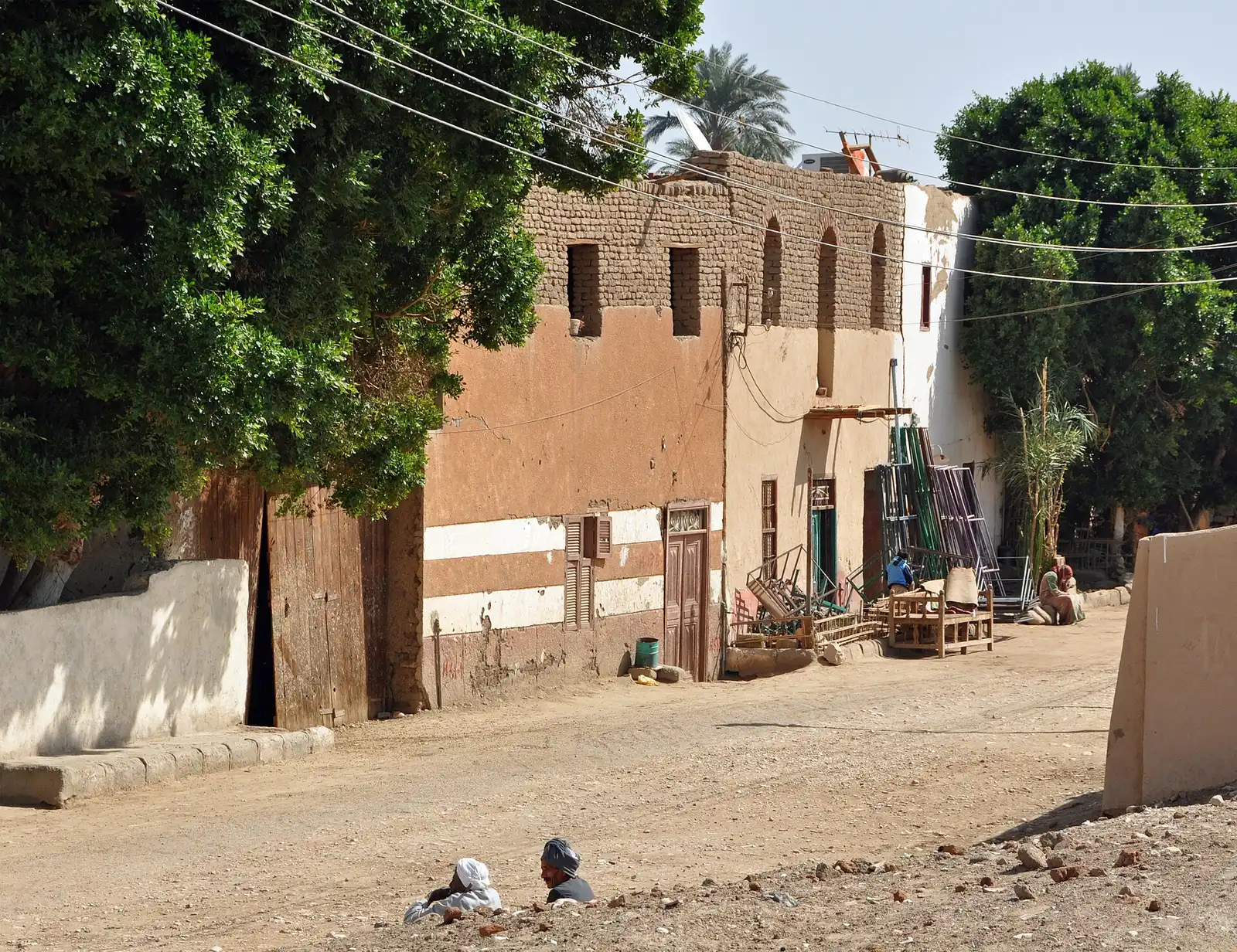
People have long lived among the tombs. Kurna (Qurna) is a group of three closely related villages on the West Bank, where families built their houses on top of the tombs they chose11.
That made Qurna a long-running flashpoint. Egyptian architect Hassan Fathy built New Qurna between 1946 and 195211, and Luxor’s governor said in 2006 that 3,500 families12 would leave Qurna. What followed:
- Daily News Egypt reported in December 2006 that residents would move to New Qurna-Taref13, built in the desert further north.
- Smithsonian Magazine reported in December 2017 that bulldozers razed scores of houses between 2006 and 200914, some tagged as heritage sites in their own right.
- The same report says only Qurnat Marei, reportedly kept as a film set, and a few holdouts remain, with former residents scattered among at least five or six14 other villages.
- Qurna’s people still provide most of the labour on many dig sites14.
The site is run by the Supreme Council of Antiquities through the Antiquities inspectorate of Luxor1, working with Luxor Governorate. UNESCO says local communities are involved in maintenance and conservation projects1.
Dress and manners
Culture and etiquette in Luxor
Dress modestly: the UK Foreign Office advises it especially in rural areas, mosques and souqs, and asks you to take care not to cause offence, especially during Ramadan or at religious sites15.
- Women travelling alone: Wikivoyage suggests you cover your arms and legs16.
- Ramadan: eating, drinking or smoking in public during daylight hours15 is seen as culturally insensitive.
- Couples: physical affection in public is frowned upon15.
- Photos of people: ask permission first16.
- Museums: the Ministry of Tourism and Antiquities asks Mummification Museum visitors to wear appropriate attire17.
Wikivoyage notes that Egyptians consider it shameful not to give a guest a warm welcome16.
Seeing Thebes today
Ready to turn the history into a plan? Start here:
- Browse the temples and tombs worth your time on both banks.
- Choose the best hotel area for your stay before you book.
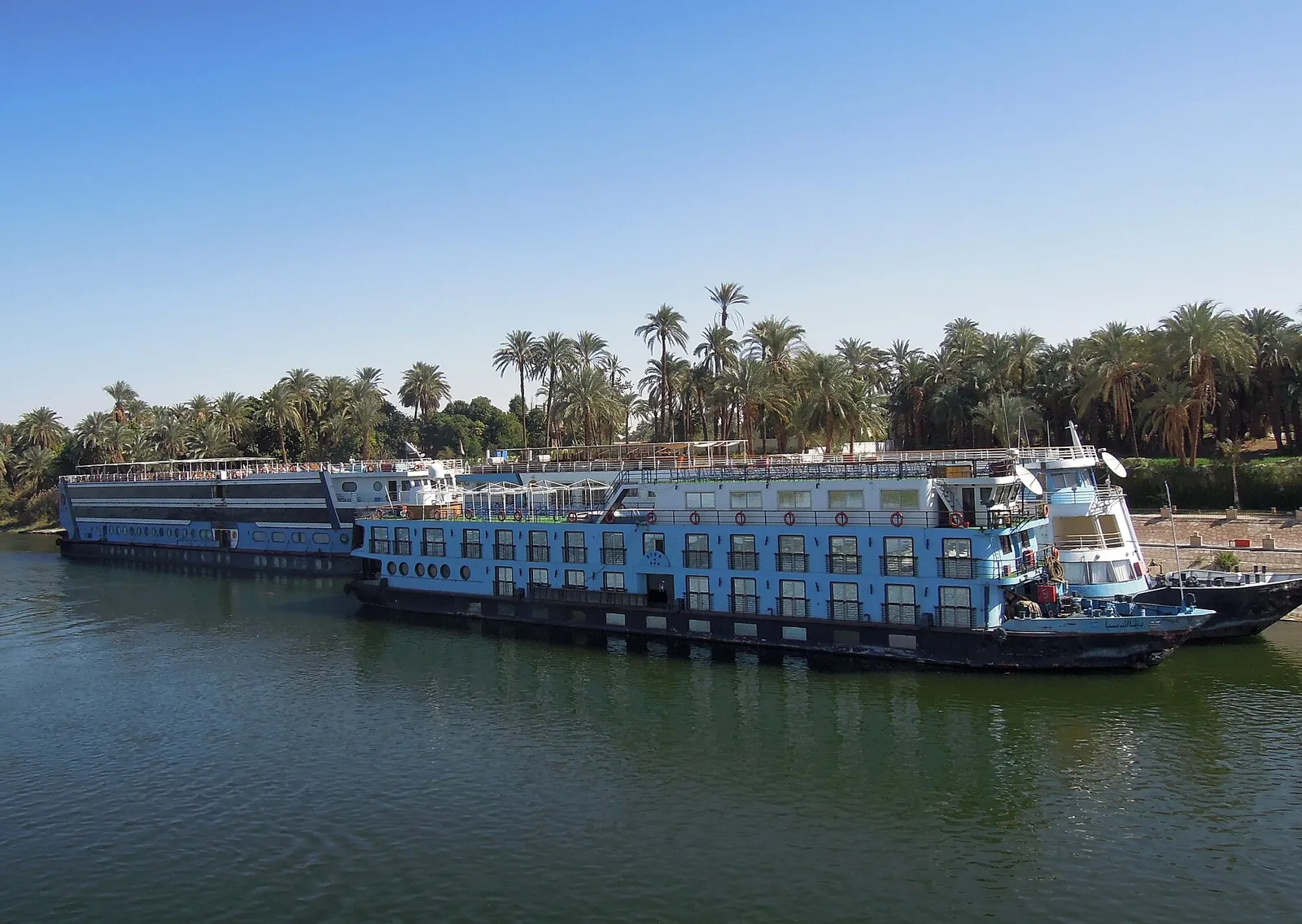
- Compare Cairo to Luxor Nile sailing options if you’d rather arrive by river.
Questions people ask
Is Thebes still a city?
Yes, as Luxor, home to 284,952 people in 2023.
Why is there a Thebes in Greece and Egypt?
From Homer's Iliad on, Greeks called Egyptian Thebes 'Thebes of the Hundred Gates' to tell it apart from the Greek Thebes.
When is the best time to visit Thebes?
Winter, from November to early March. Summer highs average above 40 °C.
Photos: Wikimedia Commons and Pexels. Authors and licences: image credits
Checked against 17 sources · last checked October 2026
- whc.unesco.org (official) · checked October 2026
- Wikipedia · checked October 2026
- Wikipedia · checked October 2026
- Wikipedia · checked October 2026
- Wikivoyage · checked October 2026
- Experience Egypt (official) · checked October 2026
- Wikipedia · checked October 2026
- Wikipedia · checked October 2026
- Wikipedia · checked October 2026
- Wikipedia · checked October 2026
- Wikipedia · checked October 2026
- Al Jazeera (news) · checked October 2026
- Daily News Egypt (news) · checked October 2026
- Smithsonian Magazine (news) · checked October 2026
- GOV.UK (official) · checked October 2026
- Wikivoyage · checked October 2026
- egymonuments.gov.eg (official) · checked October 2026
Page history · last changed 23 October 2026
- First written